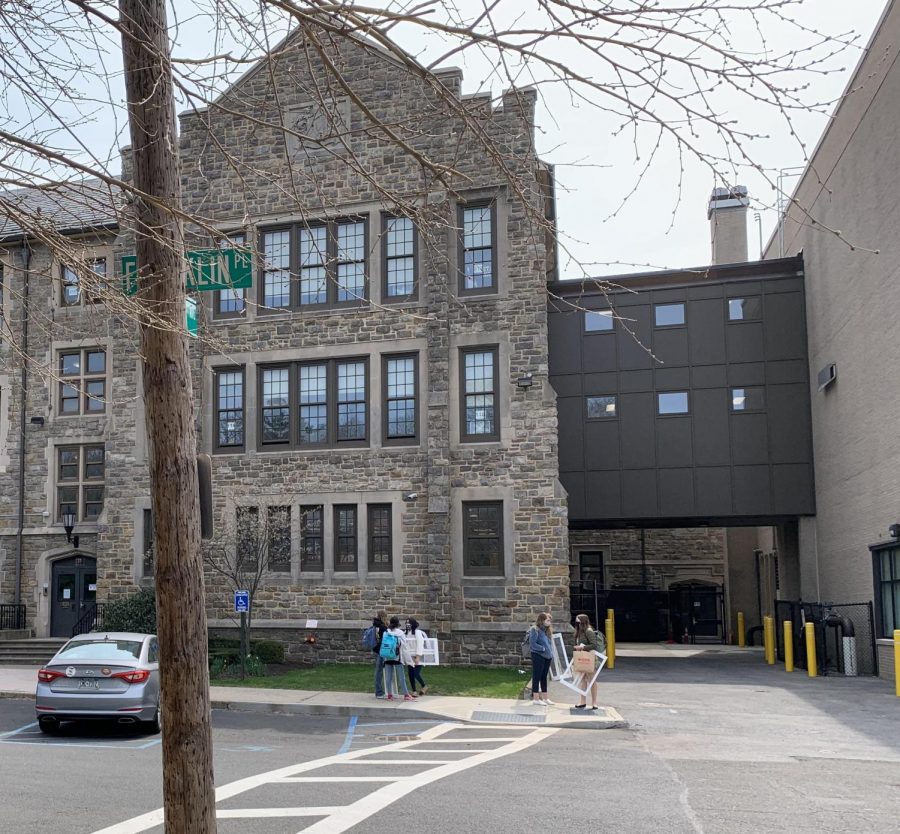


New York State public school students have been taking Regents exams since the 19th century. In recent decades, the tests have become high-pressure exercises that could help high school students get into the colleges of their choice or dash their hopes to be accepted at the most selective universities. As the Regents exams at Pelham Memorial High School wrapped up last month, students still hoped and prayed for the best scores possible, but beginning next year, the tests will no longer carry the clout they used to.
“Starting in the 2025-2026 school year, we will no longer include individual Regents Exam scores on the transcripts we send to colleges,” wrote PMHS Sean Llewellyn in an email to parents last month. “In making this statement, we considered ongoing changes in New York state’s assessments, as well as our school’s commitment to a broader and more meaningful approach to student learning.”
The New York State Education Department introduced a plan last year to phase out Regents exams starting in the 2027-2028 school year, mirroring a national trend as many states have already abolished statewide standardized tests.
Among many colleges and universities outside of New York, Regents scores are often overlooked. Prioritization instead is on SAT and ACT scores and overall course grades, prompting a change at the high school on how Regents scores are shared.
In the past, New York State students had to pass five Regents exams in order to graduate, one exam each in math, science, social studies, and the ELA exam, along with one additional Regents test. A typical Pelham student is expected to take eight Regents exams, two in math, three in science, two in social studies, and the ELA exam, along with one or two Foreign Language exams (FLACS).
Although Regents scores will still show up on official transcripts, they will no longer appear on the transcripts counselors send to an individual student’s applied colleges. In Pelham, Regents scores will continue to be factored into students’ final grades, with a weight of 11%, according to the PMHS student handbook.
While Pelham is not unique in including Regents scores in final grades, some schools in Westchester such as Rye do not factor the tests in students’ final grades at all.
New York State data shows that Regents scores and proficiency results vary widely by school district. While most Pelham students typically meet proficiency on these tests, in Westchester alone the proficiency results of school districts varied by as much as 78% on the Geometry Regents.
The June Geometry Regents was one of the most challenging exams offered last year, with only a 57% proficiency average statewide, according to state data. In Pelham, 80% of students taking the exam met proficiency, but the Mount Vernon and New Rochelle school districts had proficiency scores of 22% and 50% respectively. Meanwhile, the Dobbs Ferry and Briarcliff Manor school districts had proficiency ratings of 92% and 100%.
Despite being offered more math and science Regents exams, Pelham students usually perform better in the ELA and social studies exams than STEM exams, when compared to other competitive schools in Westchester. For example, in 2024 Pelham had higher proficiency levels than both Eastchester and Rye students on the ELA, and both World and US History exams by 1-2 percentage points and 2-7 percentage points respectively.
However, on the Algebra I Regents, Pelham students fell behind these two schools in proficiency levels by 7-8 percentage points. Furthermore, Pelham also had lower proficiency than Rye on both the Earth Science and Living Environment Regents, while Eastchester had higher proficiency than Pelham in the Earth Science and Chemistry Regents, but not the Living Environment exam.
Some New York public school districts are opting out of Regents altogether, instead shifting to performance-based-assessments that have students create projects or apply their knowledge to complete tasks instead of testing. These presentations often allow for more creativity and ingenuity among students, but can also lead to more subjective grading.