
Project Community is a local nonprofit organization dedicated to supporting youth and teens through mental health awareness, and skill-building initiatives that foster self-awareness, resilience, and confidence in navigating everyday challenges.
Project Community partnered with the Pelham Art Center to host “Be the Influence,” the second workshop in a two-part series attended by more than 15 teenagers. The second workshop focused on helping teens better understand the time they spend on social media, how platforms are designed to maximize engagement, and how companies ultimately profit from user overuse.
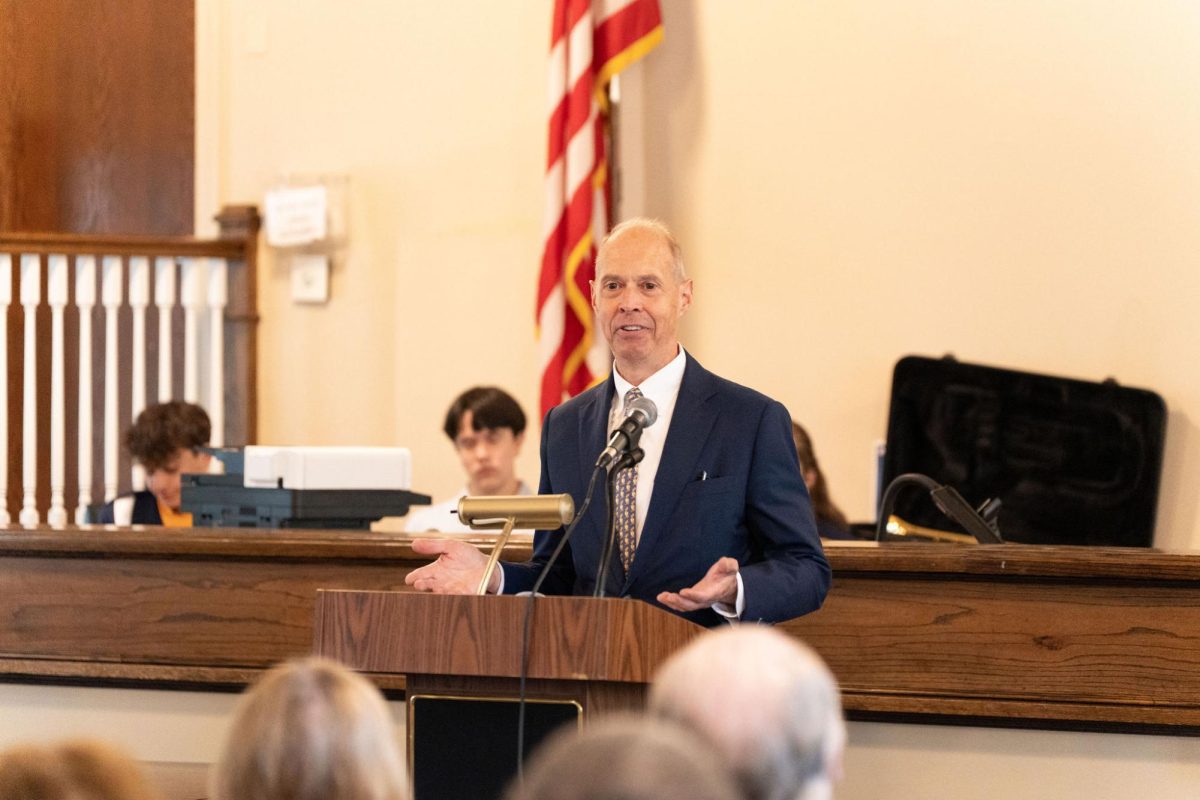
“For the second workshop, Project Community and Pelham Art Center wanted to present social media use in a way that felt immediate and even shocking,” said Nancy Mazzei, Interim Executive Director at Pelham Art Center. “We wanted teens to understand that on these platforms, the commodity is them. When we started visually equating time spent to hours, days, months, and even years, it became much more tangible.”
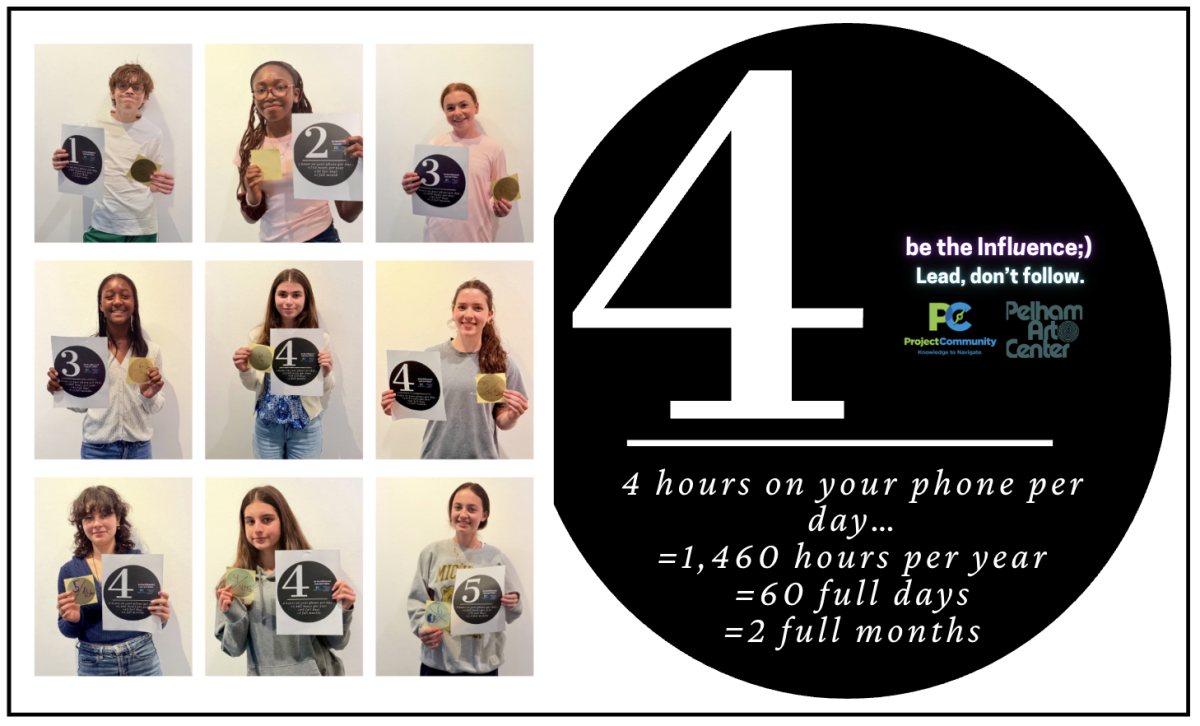
The workshop was led by Joanna McCormick alongside Nancy Mazzei and Pelham Memorial High School graduate Hudson Hardwick. Mazzei created a series of graphics illustrating daily social media use ranging from one to six hours, translating that usage into cumulative time over months and years; an eye-opening exercise for participants. For instance, 4 hours per day transforms into 2 whole months per year! Joanna McCormick pointed out that, “Once you spend more than 3 hours per day on your phone, anxiety and depression levels increase.”
“We wanted to move beyond simply telling teens to spend less time on their phones and instead give them the tools to really understand why these platforms are so hard to step away from,” said Joanna McCormick. “When they can see the bigger picture and connect it to their own lives, that’s when meaningful change can begin.” Hudson Harwick gave a few ideas of ways to limit screen time, from setting your own limits and turning off notifications to downloading an app, such as Opal, Brick, or Forest. He assisted attendees in downloading and setting up apps when requested.
As part of the activity, teens were asked to estimate their daily screen time and stand next to the graphic that most closely matched their usage. Most participants estimated between four to five hours per day, including time spent on social media, gaming, texting, and other phone activities. For many, this was the first time they had seen their usage visualized in such a concrete way.
The workshop also featured three breakout group discussions centered on real-life digital scenarios, including how to respond to direct messages from strangers, recognizing scams or requests for money, and identifying trolling and online red flags. Mazzei emphasized practical tools such as blocking, unfollowing, and adjusting privacy settings – features that are often underutilized simply because they are not widely discussed.
“If you don’t like what you read, see, or hear – unfollow and block,” Mazzei said. “You have the power to control your experience: who you listen to, what content you consume, and how you engage. Making your account private is one way to take ownership of that experience.”
With strong engagement and thoughtful participation, Project Community and the Pelham Art Center plan to expand the initiative into a full workshop series. Future sessions will continue to combine hands-on art, open dialogue, and practical strategies to help teens navigate the challenges of digital life while supporting their mental health and personal growth. “This isn’t a lecture series – we want teens to exchange experiences and advice, and we see that as the most important part of these workshops.” Mazzei added.
In conclusion of the workshop one parent offered: “In today’s world, it’s absolutely critical that both kids and adults understand the tremendous influence social media platforms have on the information we consume, the opinions we form, and even how our brains function. With that in mind, programs like this are truly essential.”
A key takeaway reinforced throughout each workshop was a simple but powerful message: “Be the influence.” Participants were encouraged to share what they learned with friends and family, helping to spread awareness and inspire positive, informed digital habits within their communities.
Editor’s note: This press release was provided by the Pelham Art Center. The Pelham Examiner publishes press releases in the form received as a service to the community.