


American patriots led by General George Washington defeated the British and won independence following their decisive victory at Yorktown, Virginia in 1781. But this improbable triumph might not have happened if Washington had not been able to escape absolute defeat and capture on numerous occasions from the time fighting broke out in 1775.
One of those escapes was made possible by the bravery of some 750 Massachusetts militiamen who fought about 4,000 British and Hessian troops in what’s known as the Battle of Pelham on October 18, 1776.
The troops, led by Colonel John Glover of Marblehead, slowed the advance of British forces under the direction of Admiral Richard Howe. The delay was significant because it allowed Washington and the main force of his fledgling Continental Army to retreat from Manhattan to White Plains, where the general and his troops could regroup following a defeat in the Battle of Long Island.
“Glover is a true patriot that many of us have never heard of,” said historian Lycia Kougemitros at a presentation earlier this month at the Bartow-Pell Mansion on Shore Road. “I know the Battle of Pelham may not be more than a sentence or a paragraph in history books, but had it not been fought here, we may all have ended up as British subjects.”
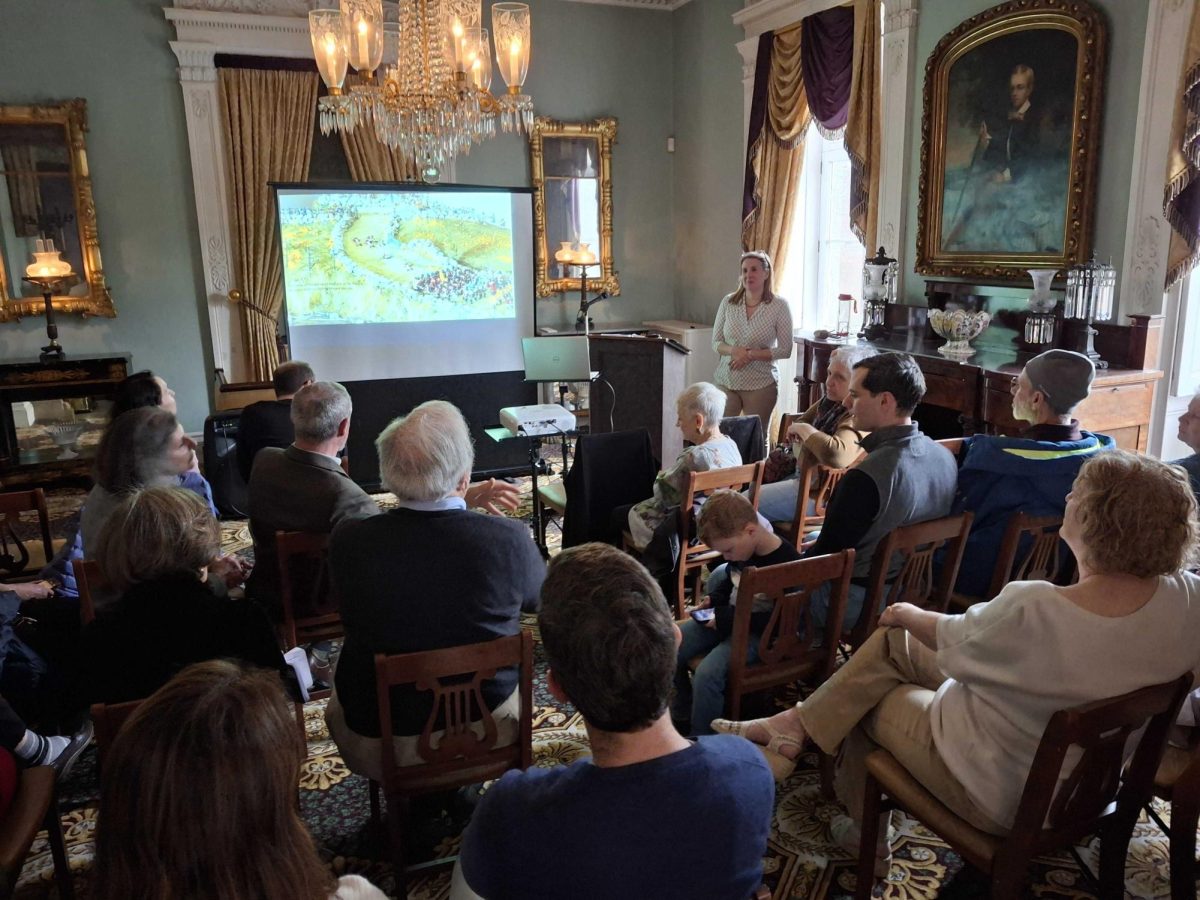
 In a one-hour presentation on March 8, Kougemitros provided an overview of the causes leading up to the American Revolution, and dug into the ruptures within families whose members sided with loyalists to the crown or with the rebels. In particular, she focused on the descendants of Thomas Pell, who acquired a large tract of land including present-day Pelham from a local Native American tribe in 1654. More than a century later, his descendants included loyalists to King George III as well as fighters for the patriot cause.
“It was not unusual for families to be divided,” she said, pointing out that Benjamin Franklin’s son served as the last royal governor of New Jersey, and that George Washington’s brother was a loyalist.
“It was the same for our family here in Pelham,” said Kougemitros, speaking in one of the two large drawing rooms of the Bartow-Pell Mansion, where she serves as a museum curator and educator. “We are in what was considered neutral ground.”
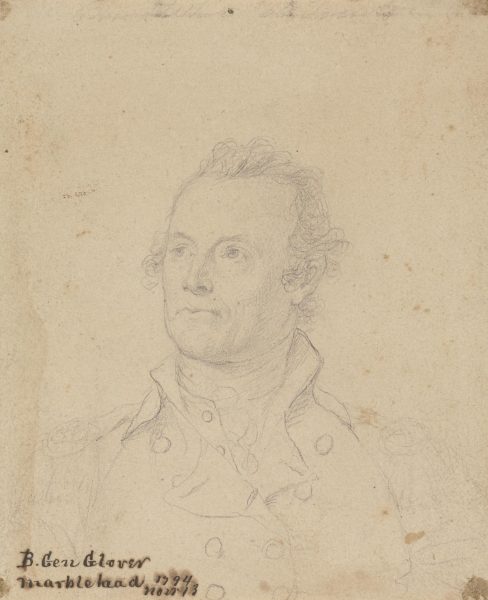
Before describing the Battle of Pell’s Point, Kougemitros provided some context. The British Army and its Hessian troops defeated Washington and the Continental Army in the Battle of Brooklyn Heights (also known as the Battle of Long Island) in August 1776. Glover and his boat-savvy “Marbleheads” evacuated Washington and his troops from Brooklyn on August 29 and 30, ferrying them across the East River to Manhattan.
As the British gained more control of Manhattan, moving south to north, Washington eventually ordered his troops to retreat from the northern tip of the island towards safer territory in White Plains. The lower Hudson River was exposed to British naval ships, so an attempt to cross over to New Jersey would be risky. Washington put Glover’s men along with three other brigades in the area near what is now Memorial Field in Mt. Vernon, guarding his southern flank.
On the morning of October 18, some 4,000 British and Hessian troops under Admiral Richard Howe of the Royal Navy landed at what is now Rodman’s Neck and started moving north.
“It was 6:30 in the morning,” Kougemitros said. “Glover has been watching,” and he sees some 200 flatboats coming, escorted.
Glover spied the boats landing at Pell’s Point from a hilltop perch above Memorial Field. Although the British and Hessian forces are far superior in numbers, training and equipment, the patriots are able to surprise the king’s soldiers as they march inland.
The first encounter takes place near what is now known as Glover’s Rock, on the road near Orchard Beach. Abel De Vaux and a small group of patriots take and return fire, slowing the British temporarily.
Over the next two miles, patriot soldiers fire at the British and Hessians from behind stone walls, using one set of soldiers to fire initial rounds then, when the enemy thinks the patriots are re-loading their muskets, relying on another group to pop up from behind the wall to continue shooting, catching the redcoats off guard.
Some historians believe the bulk of these skirmishes occurred near Prospect Hill in Pelham Manor. Kougemitros maintains that much of the fighting took place just south of that area, on what are now the fairways of the 2nd and 3rd holes of the Split Rock golf course.
“This is an area where you can still hear shooting,” Kougemitros said, provoking chuckles from the 30 or so attendees, many of whom live in Pelham and the Bronx and were thus familiar with the crackling sound of gunfire that’s still audible on Rodmans Neck, site of the New York Police Department’s shooting range.
Over the course of the day, British officers use their superiority in numbers to outflank Glover, sending the patriots into retreat. The British take over St. Paul’s, where they bury some of the fallen Hessians, but they do not press their advantage, letting Washington escape to White Plains with his Continental Army intact.
Kougemitros emphasized the importance of Glover’s battle. “Had the British landed, and we didn’t put up any resistance, they would have trapped and encircled Washington,” she said. But Glover’s men stall the British incursion. “At the end of the day, Glover and his men will retreat about 3 miles north… they hadn’t had anything to eat all day.”
In written correspondence with Washington, Glover indicated that only eight of his soldiers had died that day, and 13 wounded. Local historians believe that the patriots killed hundreds of Howe’s soldiers, although the Admiral only reported three.
Two months later, Glover and his Marbleheads would once again provide invaluable help to Washington, as they ferried him and his soldiers across the Delaware River on Christmas night. The feat allowed Washington and the Continental Army to surprise the British-Hessian forces at Trenton and defeat them. Washington’s defeat of the British at Princeton a week later solidified the patriots’ hold on New Jersey.
Glover and most of his men left after the Battle of Trenton and returned to Massachusetts. At Washington’s request, Glover came back to the Continental Army in the summer of 1777 as a Brigadier General. Following the victory at Yorktown, he retired and bought a farmhouse near Marblehead, in what is now Swampscott.
Glover served two terms in the Massachusetts House of Representatives and was a delegate to the state convention that ratified the U.S. Constitution in 1788. On a tour of New England states in 1789, President Washington paid him a visit. Glover died on January 30, 1797.








Carol Guthrie • Mar 29, 2026 at 9:24 pm
Very interesting. Some of this history was covered in Ken Burns’ film on the American Revolution.