


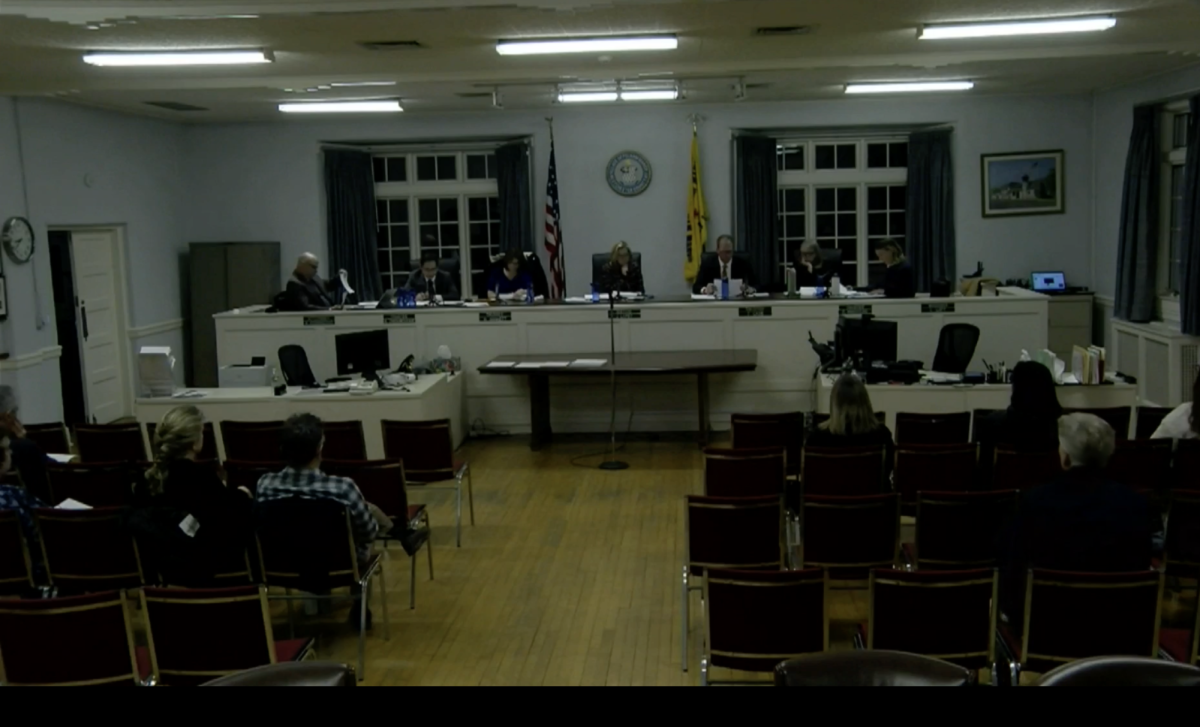
The Village of Pelham Manor Board of Trustees last week passed a proposed budget for 2026-2027 calling for a 2.85 percent increase in real estate taxes, or $430,030, keeping the village just under New York state’s 2.86 percent “tax cap.”
The budget passed by a 4-1 vote, with four incumbents–Mayor Jennifer Lapey, Deputy Mayor Breda Bennett and Trustees Maurice Owen-Michaane and Tim Case–voting in favor. Deborah Winstead, who won a seat on the board last fall, voted against the resolution to adopt the proposed budget. The vote took place at the trustees’ March 24 meeting.
The approved budget calls for the village’s operating expenses to be $19.4 million. After a capital interfund transfer of $2.6 million, the total proposed budget would be $21.9 million. The $2.6 million transfer would cover this year’s capital investments, including $500,000 toward a tower ladder replacement for the Village of Pelham Manor Fire Department, sanitary sewer rehabilitation, fixing of police headquarters, and Village Hall renovations, among other items. A total of $100,000 was earmarked for stormwater management.
In the operating budget, the lion’s share of operating expenses, some $8.2 million, goes to the police and fire departments. Employee benefits, including retirement, health insurance and other benefits, amount to $7.1 million. Transportation, recreation and community services make up the rest of the expenses.
The resolution passed after an extensive discussion between Trustee Winstead and Village Manager Lindsay Luft over specific budget items as well as the question of whether the village’s annual budget estimates were overly conservative.
Winstead focused in part on the tax revenues generated by Pelham Manor’s commercial districts. In 2021, she said, “It looks like we under-budgeted non-property tax revenue by almost $1.7 million and in 2022 by $1.7 million and ’23 $1.2 million and ’24 $2.3 million. And then ’25 is wonky because it it comes out we under-budgeted…..maybe around $2 million. So I guess I’m sort of wondering why we do that.”
“When you estimate your revenues, you would much rather come up over-budget than under budget,” said Luft. “That’s everyone’s biggest fear when you’re putting together a budget,.. A lot of the items are unpredictable. You know, one year we didn’t hit our number on the mortgage tax, for example. So we had to adjust that back…We have steadily… kept an eye on the sales tax because that does seem to be a fairly consistent revenue.”
At another point, Winstead asked whether the village was under-budgeting in order to save. “Can we get a little bit closer in our budgeting?” she said. “I think we’d want to be at least somewhat accurate.”
Luft said some of the challenges to the budgeting process involved state grant money to pay for various projects in the village. “The grant reimbursements that we get back…we don’t know if we will get it this year,” said Luft. “We don’t know if we’re going to get it the next year. Sometimes we get it a couple years later and then the the auditors end up dragging it back a couple fiscal years.”
Winstead also asked about funds set aside for improvements to Village Hall.
“One of the major goals under the renovation is we have an accessible entrance here, but we do not have an ADA-compliant bathroom in this building,” Lapey said.
“And one of the things I think this board and and this manager and treasurer have been mindful of is this is a beautiful historic building, but it’s also a functioning building,” she continued. “And rather than going to a multi-million dollar complex or trying to level this and start over, we’re going to work within–if this is approved, if this is adopted–we’re going to work within a framework that we’ve roughly sketched to get ADA-compliance for toilet facilities.”
“Things have changed and this is an attempt to modernize without breaking the bank,” Lapey said.
One area of contention involved the proposed budget for planting trees, which was increased from $20,000 in the current year to $25,000 for the coming year, or some 75 new trees being planted. Winstead said she would favor setting aside funds to allow the Manor to plant 250 new trees in the coming year, even if it involved budgeting an extra $20,000 for the effort.
“I’m not a spendthrift,” she said. “My goal would be not to spend that all, but I would like to be able to have it there. So we have a just the place, the allocation for it….It doesn’t mean we have to do it every year, but we are losing our tree canopy, and planting them at 50 or even 75 a year or even 250 if we did it for 10 years would not replace our tree canopy.”
“Pelham Manor has an incredibly strong record on tree canopy replacement,” said Lapey. “I mean, we can always do more. If you look at similarly situated and neighboring municipalities that have done massive amounts of development and hardscape, trees are coming down in record number. Many of them are bigger municipalities, but, you know, apartment buildings and bigger structures and paving.”
Winstead noted that the Town of Pelham has submitted a grant request for a tree canopy assessment of the Manor as well as the Village of Pelham.
Lapey asked Luft what she thought. “I think it’s important to take these things in stride and do, you know, manageable pieces and see how it goes,” she said. “You know, a few years ago, some of our younger trees unfortunately didn’t make it because of the extreme heat. So I would propose that we do a modest, manageable increase that we feel we can make sure that the trees survive.”
During the public comment period, several residents spoke out against suggestions to add bike lanes to local streets. Other residents spoke about the importance of the tree canopy and the hazards of dumping lots of salt on roadways following snowstorms.
One resident, Cindy Courtien, addressed Winstead and expressed disappointment that she voted against the budget.
“It kind of saddens me that you were not in approval of the budget on a whole,” said Courtien. “And I would just like to know exactly, is it just because of the trees or is it the whole budget… I know you weren’t here for the last meeting and that was unfortunate.”
“This is our home, all of our homes,” Courtien continued. “We should all work together. I think it’s very important that we work together. And I’m sure there’s other things that you could find. Maybe you and Lindsay [Luft] can talk a little more. But I think for the community as a whole, I think it would be nice for everybody to be on the same page.”
“Yeah, but we’re not,” said Winstead. “It’s the trees. It’s the way we underestimate the non-levy revenue. I think that could be tightened. It’s that we don’t have any funds in there for true traffic calming or a study.”





Scott Wolfgang • Apr 1, 2026 at 3:57 pm
These comments by Trustee Winstead are incredibly alarming and raise serious questions about her financial acumen related to municipal budgeting. If the village were to more aggressively budget for non recurring and less reliable revenue (eg grants and police fees), the options to balance the budget would be either 1) increase the budget and add unnecessary expenses the village doesn’t need or 2) decrease the levy growth, which is already the lowest by far across all of our local municipalities, and thus impair the future tax annuity stream. The end result of the latter would be reducing necessary services if the non recurring, less reliable revenue Trustee Winstead advocates budgeting more aggressively came in less than expected or having to bust the tax cap in future years to make up the difference. This is the exact scenario the Village of Pelham finds itself in which has led to a tripling of debt these last few years (now $1.6MM in annual debt service expense) and multiple tax cap busts in just the last 7 years. It’s unfortunate the Examiner isn’t more focused on reporting on the challenges facing the Village of Pelham and the Town of Pelham who are proposing nearly double digit tax growth this year. It’s the third consecutive year of tax levy growth greater than the levy for Town of Pelham.